
Each player who uses an online casino in Canada is entitled to to feel fully secure, yet the sheer number of platforms available can make it challenging to distinguish truly secure sites from those that compromise. Protection is not a extra; it is the cornerstone of a trustworthy gambling experience. From the time an account is opened to the instant a withdrawal is completed, several layers of protection must work silently in the background. Knowing these measures transforms a regular visitor into an educated player who can recognize red flags and pick platforms that really emphasize safety. This guide details the essential security pillars that define a dependable online casino, using practical examples and industry standards that apply directly to the Canadian market.
Player Protection Tools and Player Safety
Protection reaches beyond firewalls and encryption; it covers the tools that shield players from the risks of problem gambling. A truly safe casino delivers a comprehensive suite of responsible gambling features that put control directly in the hands of the user. Deposit limits, loss limits, playtime reminders, and self-exclusion tools are not afterthoughts but built-in elements of the account dashboard. In Canada, where provincial programs like PlaySmart provide extra assistance, the best online casinos coordinate their internal tools with these outside resources to establish a holistic safety net.
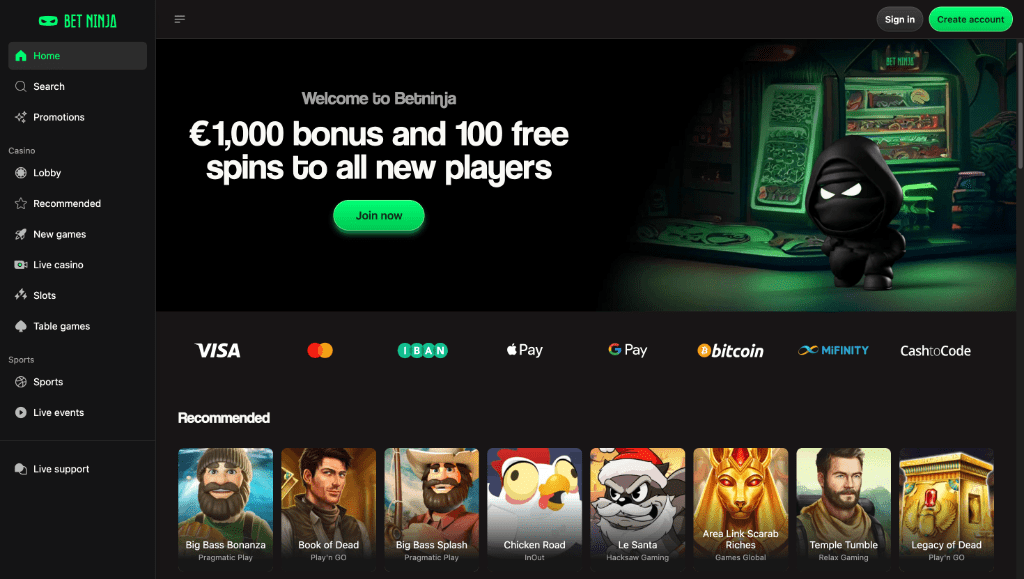
Session reminders that pop up at regular intervals encourage a brief reflection, while cooling-off periods let a player to step away for days or weeks without fully closing an account. A website such as Betninja Casino keeps these controls simple to find, often with a simple click from the primary menu, and connects directly to bodies like the Responsible Gambling Council. This devotion to user welfare is a security measure in itself, protecting psychological and monetary health just as diligently as encryption secures user information. When a casino commits to these tools, it demonstrates that user safety is a core priority, not a regulatory requirement.
Common Questions
How does a player confirm if an online casino is authorized in Canada?
A player should scroll to the footer of the casino’s homepage and look for a license logo or registration number given by a accredited authority such as the Alcohol and Gaming Commission of Ontario, the Kahnawake Gaming Commission, or the Malta Gaming Authority. Selecting the seal should lead to a live validator page on the regulator’s website. If no license information is displayed or the link is not working, that is a major red flag. Canadian players should also review the province’s official iGaming list to verify an operator’s legal status.
Specifically what does SSL encryption secure when playing online?
SSL encryption safeguards every piece of data sent between a player’s device and the casino’s servers. This includes login credentials, personal identification details, credit card numbers, and banking information. Without this encryption, a hacker intercepting the connection could read everything in plain text. The technology encrypts the data into an unreadable format using complex algorithms, guaranteeing that even if intercepted, the information remains useless. Players can confirm active encryption by looking for the padlock icon and HTTPS in the browser address bar.
Are random number generators really fair and unbiased?
Certainly, provided the RNG has been independently tested and certified by accredited laboratories like eCOGRA, iTech Labs, or GLI. These auditors conduct billions of simulated game rounds to ensure that outcomes are statistically random and cannot be predicted or manipulated. The certification process also validates that the published return-to-player percentages correspond to actual performance. A casino that shows a valid testing seal provides a level of fairness comparable to a physical casino’s shuffled decks and spinning wheels, keeping the games trustworthy for Canadian players.
Why is two-factor authentication essential for a casino account?
Two-factor authentication adds a critical second layer of security beyond a password. If a player’s login credentials are compromised through phishing or a data breach, the attacker still cannot access the account without the one-time code sent to the player’s phone or generated by an app. This simple step significantly reduces the risk of unauthorized withdrawals and account takeovers. Since that casino accounts hold real money and sensitive personal data, enabling 2FA is one of the most effective ways a player can on their own strengthen their security posture. la source de référence
Which should a player look for in secure payment methods?

A player should look for payment methods that offer tokenization and comply with PCI DSS standards, such as Visa, Mastercard, and Interac. E-wallets like PayPal, MuchBetter, and ecoPayz offer an extra privacy layer because the casino never sees the player’s https://www.reddit.com/r/DotA2/comments/y06ohg/are_there_legit_betting_sites_for_dota_ti_games/ bank details. For Canadian users, Interac e-Transfer is particularly secure because it uses the existing security infrastructure of major banks. Additionally, a casino that mandates identity verification before processing withdrawals is following anti-money laundering protocols that protect both the player and the platform from fraud.
How does Betninja Casino implement player security measures?
casino betninja offres de bonus integrates multiple security layers to protect Canadian players, starting with a valid gaming license and 256-bit SSL encryption across the entire site. The platform works with game providers whose RNG software is independently certified for fairness, and it supports secure banking options including Interac and trusted e-wallets. Account security features such as two-factor authentication and withdrawal locks are available, while responsible gambling tools like deposit limits and self-exclusion are built directly into the player dashboard. The casino also adheres to strict KYC and data protection policies to safeguard personal information.
Is a player self-exclude from an online casino permanently?
Most reputable online casinos provide self-exclusion options that include temporary cooling-off periods to permanent account closure. A player can usually request self-exclusion through the account settings or by contacting customer support. Once activated, the casino stops all marketing communications and prohibits login for the chosen duration. For permanent exclusion, the account is closed and may not be reopened. Canadian players can also register with provincial self-exclusion programs that cover multiple operators, providing an additional safety net beyond the individual casino’s internal tools.
Secure Payment Gateways and Banking Protocols
The moment a player deposits funds, the security infrastructure encounters its most critical test. Trusted casinos integrate payment gateways that adhere to the Payment Card Industry Data Security Standard, a demanding set of requirements designed to protect cardholder information. These gateways tokenize sensitive details, replacing real card numbers with unique digital tokens that are worthless if intercepted. Canadian users will also find Interac e-Transfers widely supported, and this method benefits from the robust security protocols of Canada’s major banks, offering an extra layer of protection that many locals favor.
Withdrawal processes are another area where security measures become apparent. Legitimate operators enforce identity verification before releasing funds, a step that irritates some players but is essential for preventing money laundering and unauthorized access. This Know Your Customer procedure requires government-issued ID, proof of address, and sometimes a source of funds declaration. A casino like Betninja Casino simplifies this process through encrypted document uploads and rapid review teams, combining security with convenience. The presence of multiple trusted banking methods, from credit cards to e-wallets like MuchBetter and ecoPayz, all protected by multi-factor authentication, signals a payment ecosystem built with player safety at its core.
Fair Play and Random Number Generator Certification
A trustworthy casino is more than about securing data; it must also guarantee that every spin, hand dealt, or roll of the dice is authentically random. The heart of this honesty is the Random Number Generator, a sophisticated algorithm that produces results unable to forecast or influence. Without third-party testing, however, an RNG is merely a claim. Respected casinos submit their RNG software to recognized testing laboratories like eCOGRA, iTech Labs, or GLI, which run countless of virtual rounds to validate statistical randomness. A approval seal from any of these agencies is a compelling trust signal that the games are not manipulated in the house’s favour past the advertised house edge.
For Canadian players, the availability of such accreditations indicates that the identical level of fairness anticipated in a land-based casino is replicated online. These audits also check the return-to-player percentages to ensure they align with the stated figures. When a operator like Betninja Casino partners with game providers that have multiple fairness certificates, it shows a dedication to clear, checked outcomes. Players can frequently view the most recent test reports directly from the casino’s footer or the auditor’s website, converting a complex process into a tangible, confirmable guarantee that the gaming experience is based on honesty.
Encryption Methods and Data Safeguarding
Any personal information provided to an online casino traverses the internet, and without encryption, that data could become an open book to cybercriminals. The industry standard is Transport Layer Security, commonly identified by the padlock icon in the browser address bar and the HTTPS prefix. This technology converts sensitive details such as home addresses, identification documents, and banking credentials into unreadable code during transmission. A casino that does not implement at least 128-bit or 256-bit SSL encryption is essentially risking breaches, and no player should ever submit private data on a site lacking this basic protection.
Strong encryption, however, only solves part of the puzzle. The way a casino stores data after it arrives is equally critical. Leading platforms use advanced firewalls, intrusion detection systems, and strict internal access controls so that even employees cannot view raw personal files without authorization. Canadian players who register with a security-focused brand like Betninja Casino can expect that their KYC documents are encrypted at rest and handled according to privacy laws such as PIPEDA. This dual layer of protection, securing data both in transit and on servers, creates a fortress around the player’s identity and financial footprint.
Account Security and Two-Step Verification
A strong password by itself is no longer sufficient to safeguard a casino account, especially when actual money is at stake. 2FA has emerged as the industry standard, incorporating a additional verification step that usually involves a one-time code delivered to a mobile device or created by an authenticator app. This signifies that even when a password is compromised through a data breach or phishing attack, the account is kept locked without that additional code. Canadian players must regard 2FA as non-negotiable and set up it promptly upon registration at any online casino.
In addition to 2FA, responsible platforms monitor accounts for abnormal activity using activity monitoring. If a login attempt starts from an unrecognized device or location, the system can trigger a security alert or briefly suspend the account pending verification. Betninja Casino and similar security-conscious operators also urge players to establish withdrawal locks, which block any payout requests for a specific period after a password change. These proactive measures, alongside automatic session timeouts and login attempt limits, establish a defensive perimeter that drastically minimizes the risk of account takeover and unauthorized transactions.
The Role of Licensing and Regulation in Canada
A reputable online casino never operates in the shadows. Licensing is the single most visible indicator of a platform’s commitment to security, and in Canada, the landscape has evolved significantly. Provinces like Ontario have set up their own regulatory frameworks through the Alcohol and Gaming Commission of Ontario, which regulates iGaming operators under strict conditions. Casinos that hold a license from a recognized authority must pass thorough background checks, prove financial stability, and prove that their games are fair. For players, this means that a licensed site is regularly audited and held accountable if standards slip. Looking for a license number at the bottom of the homepage is a habit that quickly filters out questionable operators.
Beyond provincial oversight, many international casinos serving Canadians carry certifications from bodies like the Malta Gaming Authority or the Kahnawake Gaming Commission. These regulators enforce player fund segregation, which means deposits are kept in separate accounts from operational cash, so money is safeguarded even if the company experiences financial trouble. A platform like Betninja Casino, which knows the expectations of Canadian players, prominently shows its licensing credentials and makes regulatory information easy to verify. This transparency is not just a legal requirement; it is a sign that the operator has nothing to hide and is prepared to submit to external scrutiny at any time.